PM2.5 and PM10 Inlets
(Flat Plate Version is Discontinued)
|
Revised: January 2007
There now exist two similar PM10 inlets for sampling at 16.67 Lpm
(1 m3/hour).
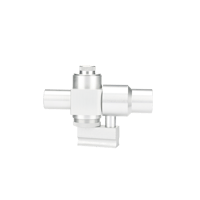
- Traditional "flat-plate". The inlet on the right in the photo was originally developed as a part of the Dichotomous sampler. It is designed to have a 50% cutpoint at 10 micrometers at the stipulated flowrate, in wind speeds of up to 16 km/hour. It is currently used as part of the specification of several reference and equivalent methods for PM10. The detailed design parameters were published in the Federal Register: 40 CFR Part 50, December 13, 1996, Proposed Rule. Figures L2 through L18, pp. 65685-65701. However, this design has a reputation for injesting water during heavy rain, and is now seldom used.
- New "louvered". The inlet on the left in the photo is the same as the traditional design with three exceptions:
- The downward sloping inlet shields serve well to prevent the ingress of water whilst sampling during stormy weather.
- The internal drain hole in the impaction plate has been enlarged to promote better water drainage from that surface.
- New, more stringent, standards for machining, heat-treating, and surface coating have been added
This new configuration is part of the design specification of the latest PM2.5 Federal Reference Method. Detailed drawings for this official inlet may be found in the Code of Federal Regulations, Title 40, Part 50, Appendix L, (July 1998 or later), Figures L2 through L18.
The new design is still a PM10 inlet. EPA has completed their wind tunnel testing of the new inlet.1 These studies confirm that the new louvered inlet's performance is virtually identical to that of the "flat plate" inlet. In acknowledgment of these results, EPA has issued a letter to all manufacturers of designated PM10 equipment utilizing the "flat plate" inlet. In this letter, dated December 16, 1999, it states that manufacturers of samplers which utilize the "flat plate" inlet are now free to furnish the "louvered" inlet.
In view of the superior characteristics of the "louvered" inlet, BGI will furnish only that type.
References:
- Tolocka, M.P., T. Peters, R.W. Vanderpool, F.L. Chen, and R. Wiener. (2001) On the Modification of the Low Flow-Rate PM10 Dichotomous Sampler Inlet. Aerosol Sci. and Tech., 34:407-415.
Copyright © 2006 by BGI / Modified:
Wednesday, January 24, 2007
|