BGI Logo

PM2.5 Very Sharp Cut Cyclone (VSCCTM)


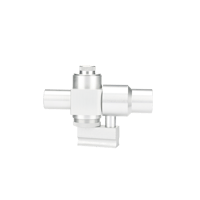
VSCCA In line Very Sharp Cut Cyclone


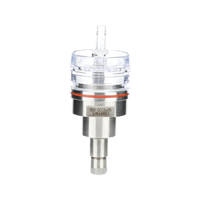
VSCCB BGI PQ200 & PQ200A Very Sharp Cut Cyclone
VSCCB BGI PQ200 & PQ200A
Very Sharp Cut Cyclone


(click image below to enlarge)

WINS/VSCC graph
WINS/VSCC graph

Downloads

Download the latest version of the instruction manual. Click here and then click on manual # 15.
Microsoft Excel calculator containing:
1. Excel calculator and graph of SCC vs D50 (flowrate input)
2. Excel calculator and graph of VSCC vs D50 (flowrate input)
3. Graph of VSCC vs EPA WINS impactor

Applications

  • New Cyclone design with significant improvements over the BGI Sharp Cut Cyclone (SCC)
  • U.S. EPA Federal Reference Method Designated
    (RFPS-0498-116)
  • PM2.5 Separator for ALL Commercial FRM Samplers
  • Model VSCCA for RAASTM, PARTISOLTM& MASSTM
  • Model VSCCB for BGI PQ200 & PQ200A FRM Samplers
  • PM2.5 Continuous Particulate Monitor Inlet
  • Indoor Air Quality Sampling Inlet
  • Speciation and Air Toxics Sampling
  • Laboratory Aerosol Research Separator

Features

  • 30 Days of 24 hour Sampling before Cleaning as an EPA FRM
  • Dry Sampling (no oil or impactor substrate to maintain)
  • Sharper penetration and cutpoint performance over the Sharp Cut Cyclone design
  • 90 Days of Continuous Operation before Cleaning
  • Inert Clear Anodize Finish on Aluminum Alloy
  • Direct Replacement for WINS without Tools
  • Simple Field Cleaning Procedure
  • Only U.S. EPA PM2.5 Dry Reference Method Device

The EPA FRM second stage size selector for PM2.5 sampling is based on the WINS (Well Impactor Ninety Six)1,2. This impactor Fine Particle separator has been laboratory and field tested for its intended purpose3. Experience over a period of several years have proven its design for single channel and sequential samplers. Nevertheless, a need was perceived for a replacement device, which would permit: Longer intervals between cleanings, a dry collection scheme and ease of cleaning. Such a device would have strong applications to continuous samplers, which are ideally attended on a monthly basis. It would eliminate speciation concerns about the aerosols and gases passing over a liquid surface, however inert. It would be field cleanable with lint free wipes and deionized water, thereby saving the cost of spare impactor wells and laboratory cleaning.

Because of this perceived need, a device was developed by BGI and Dr. Lee Kenny of the Health and Safety laboratory, Sheffield, UK. This device, called a Very Sharp Cut Cyclone is the culmination of a long series of cyclone research projects4,5,6,7. Because of its remarkable match to the WINS penetration curve it was subjected to testing for EPA equivalency Designation. These tests were successful and the VSCC, when used with the BGI PQ200 has been Designated an EPA Equivalent Sampler EQPM-0202-1428. On October 17, 2006 this designation was upgraded from Equivalent to Reference status.

This was the first and only PM2.5 Equivalency granted. As an integral and important part of this grant, BGI is permitted/required to manufacture models to fit all designated PM2.5 FRM samplers. The VSCC is an exact "plug in" replacement for the WINS. Models are provided for all FRM samplers utilizing the EPA WINS. The "A" model will fit all continuous PM2.5 samplers that are made to utilize a WINS cartridge.

It is important to note that while the Equivalency and Reference Designation, as granted to BGI, includes leave for owners of other brands of FRM samplers to utilize the appropriate model of VSCC (see below), it does not give leave for the use of "back engineered" copies, for designated sampling. Consequently, all units are marked with a sequential serial number, the designation number, model number, BGI's name and Verified Manufacture mark.

The designation of the VSCC as an EPA Equivalent PM2.5 second stage sampler, applicable to all FRM samplers, was a very strong team effort. Robert Gussman (BGI) conceived the original design that was executed by Kevin DeVoe (BGI). Dr. Lee Kenny (HSE) tested and refined the design, in effect "sculpting" the penetration to match the WINS curve and achieve even greater sharpness. Tom Merrifield (BGI) single handedly performed arduous field testing, running 10 samplers for over two weeks. David Mark (HSE) and Andrew Thorpe (HSE) performed the EPA 40CFR 53.65 loading trials, which resulted in certification for a 90 day cleaning interval. Whilst EPA office of OAR, who sat in judgment of this effort, maintained a strict impartiality, that very correct position, provided much needed guidance.

Ordering Information
Click on a part number to add that item to your Price Quote List.

VSCCA Very Sharp Cut Cyclone -- 16.67 Lpm (for use on R&P Partisol FRM's or Graseby Andersen/URG companies RAASTM and MASSTM with use of adapter part number 2302
(Also for use as In-Line PM2.5 Separator for all continuous ambient particulate monitors, no adapter necessary)
VSCCB Very Sharp Cut Cyclone -- 16.67 Lpm for use in the BGI PQ200 and PQ200A FRM samplers in place of the EPA WINS impactor
2302 VSCC cyclone out adapter for use with RAASTM and MASSTM FRM samplers in place of the EPA WINS impactor
Note: Non PM2.5 Designated instruments such as the BGI PQ100, TEOMTM, CAAMTM and BAM utilize the VSCCA, as well as all other sampling devices operating at 16.67 Lpm and having a standard EPA design socket and tenon.
VSCC2A Replacement "O" ring set for VSCCA
VSCC2B Replacement "O" ring set for VSCCB
VSCC3 Replacement "O" rings for 2302 adaptor, pkg. of 6


References

  1. Federal Register 40 CFR part 50, July 18, 1997. Figs. L-20 through L-24.
  2. Peters, T.M. et al., Design and calibration of the EPA PM2.5 Well Impactor Ninety-Six (WINS), J. Aerosol Science and Technology, Vol. 34: 389-397.
  3. Peters, T.M. et al., Field performance of PM2.5 Federal Reference Method Samplers, J. Aerosol Science and Technology, Vol. 34: 433-443.
  4. Kenny L.C. et al (2000) Development of a Sharp Cut cyclone for Ambient Aerosol Monitoring Applications, J. Aerosol Science and Technology, Vol.32: 338-358.
  5. Kenny L.C. et al (2000) A Direct Approach to the Design of Cyclones for Aerosol-Monitoring Applications, J. Aerosol Science, Vol. 31: 1407-1420.
  6. Kenny L.C. et al (2001) Evaluation of VSCC Cyclones, Health & Safety Laboratory Report # IR/L/EXM/01/01 (Click here)
  7. Thorpe A. et al (2001) Effects of Dust Loading on the Performance of the VSCC Cyclone, Health & Safety Laboratory Report # IR/L/EXCON/O1/09 (Click here)
  8. Federal Register/Volume 67, Number 63/Tuesday, April 2, 2002/Notices/Page 15566 (Click here)

Copyright © 2006 by BGI / Modified: Monday, July 20, 2009

Top of Page


Lower Navigation Bar Ambient Monitoring Instruments Air Flow Calibrators BGI Cyclones Aerosol Generating and Collecting Industrial Hygiene Industrial Air Quality Instruments Draeger Products Filter Media Calendar of Events Links Technical Information BGI History E-Mail BGI BGI Home Page


View Price Quote List Email BGI BGI Home Page