![]() |
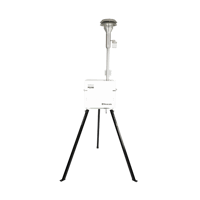
frmOMNITM Ambient Air Sampler (Filter Reference Method) |
|
|
Saturation monitoring has generally been accomplished at low flow rates in order to keep the cost and weight of the equipment down. BGI has brought this aproach to its ultimate development with the addition of a true 5 lpm inlet. The US Environmental Protection Agency (EPA) encourages state and local air monitoring groups to conduct short-term multi-site pollutant monitoring studies using a non-reference method, small portable samplers. The concept is to "Saturate" an area with easily deployed, inexpensive filter samplers, to assess air quality in areas with high concentrations of pollutants or at reclamation sites. The additional data acquired using saturation samplers helps air pollution control agencies to evaluate their monitoring networks consistent with requirements in 40CFR Part 58. Saturation monitoring may also be conducted to characterize the spatial distribution of pollutant concentration or to evaluate the contributions of sources in support of receptor modeling.
Solar PowerBGI has met and exceeded customer requests with the addition of solar power and a new proven inlet design. BGI is adding to the only family of EPA Designated Solar powered particulate samplers (PQ100 and PQ200) the new frmOMNI. The miniature solar panel is shown mounted on the heavy duty tripod stand. It is available as an accessory to provide continuous sampling capabilities for the frmOMNI in remote sample sites. Solar, AC recharge or changing of the battery provide the user with three options to sample anywhere on the planet. The instruction manual provides the information for solar alignment and angular orientation for maximum performance. The BGI 5Lpm miniPM Inlet was designed for a variety of sampling solutions and to promote the development of a new generation of BGI ambient particulate samplers. Being the only new inlet verified in three European wind tunnels, the miniPM Inlet is the main subject of a peer reviewed publication. L. Kenny, et al. “Aspiration and Sampling Efficiencies of the TSP and Louvered Particulate Matter Inlets”, J. Environ. Monitoring, 2005, 7 481-487. Applications
Features
|
||||||||||||||||||||||||||||||||||||||||